

Introduction About When Can I Start Bending After a C-Section
Recovering from a Cesarean delivery requires patience, gentle movement, and a clear understanding of what your body has just been through. Many new mothers wonder “When Can I Start Bending After a C-Section?”, especially when daily tasks such as picking up items, caring for a newborn, or doing light household chores become necessary.
Bending too early after a C-section can place stress on the healing tissues, contribute to pain, and increase the risk of incision complications. Although the external scar may look healed within a couple of weeks, the deeper layers require significantly more time to strengthen.
This medical guide provides a week-by-week timeline, explains the science behind healing, and outlines safe bending techniques to help you return to normal activities safely, confidently, and without harming your recovery.
Table of Contents About When Can I Start Bending After a C-Section
Understanding What Happens During a C-Section
A Cesarean section is a major abdominal surgery involving several layers of tissue. To understand why bending is limited during recovery, it helps to know what the procedure involves:
Layers involved in a C-section
- Skin – the outermost layer incised to open the abdominal cavity.
- Subcutaneous fat – gently separated to expose the fascia.
- Fascia (the strong connective tissue layer) – cut to access the abdominal muscles; this layer is the slowest to heal.
- Rectus muscles – not cut, but separated.
- Peritoneum – opened to reach the uterus.
- Uterus – the final layer incised to deliver the baby.
Healing timelines for each layer
- Skin: 10–14 days for initial closure
- Fascia: 6–8 weeks for primary healing, months for full strength
- Muscle: soreness improves within weeks, full tone returns gradually
- Uterus: 6 weeks for significant healing
These deeper layers determine when you can safely bend because bending increases intra-abdominal pressure, affecting the fascia and incision line.
Internal healing takes longer than the scar
Even if the outer incision looks perfect, the internal tissues may still be fragile. This explains why healthcare providers recommend delaying bending, lifting, twisting, and intense abdominal activity in the early weeks after surgery.
Why Bending Is a Concern After a C-Section
Bending requires the abdominal muscles and fascia to contract and stretch. After a C-section, these tissues are inflamed, recovering from surgical trauma, and held together with sutures.
1. Increased intra-abdominal pressure
When you bend from the waist, pressure inside the abdomen rises. This pressure pushes outward against the healing incision, potentially stressing the sutures.
2. Risk of wound complications
Early bending can increase risk of:
- Incision dehiscence: partial reopening of the wound
- Hernia formation: especially if fascia has not fully healed
- Seroma or hematoma: fluid collection under the incision
- Inflammation or pain
3. Postoperative pain and swelling
Bending too early often leads to sharp pulling sensations, discomfort, or increased swelling, delaying recovery.
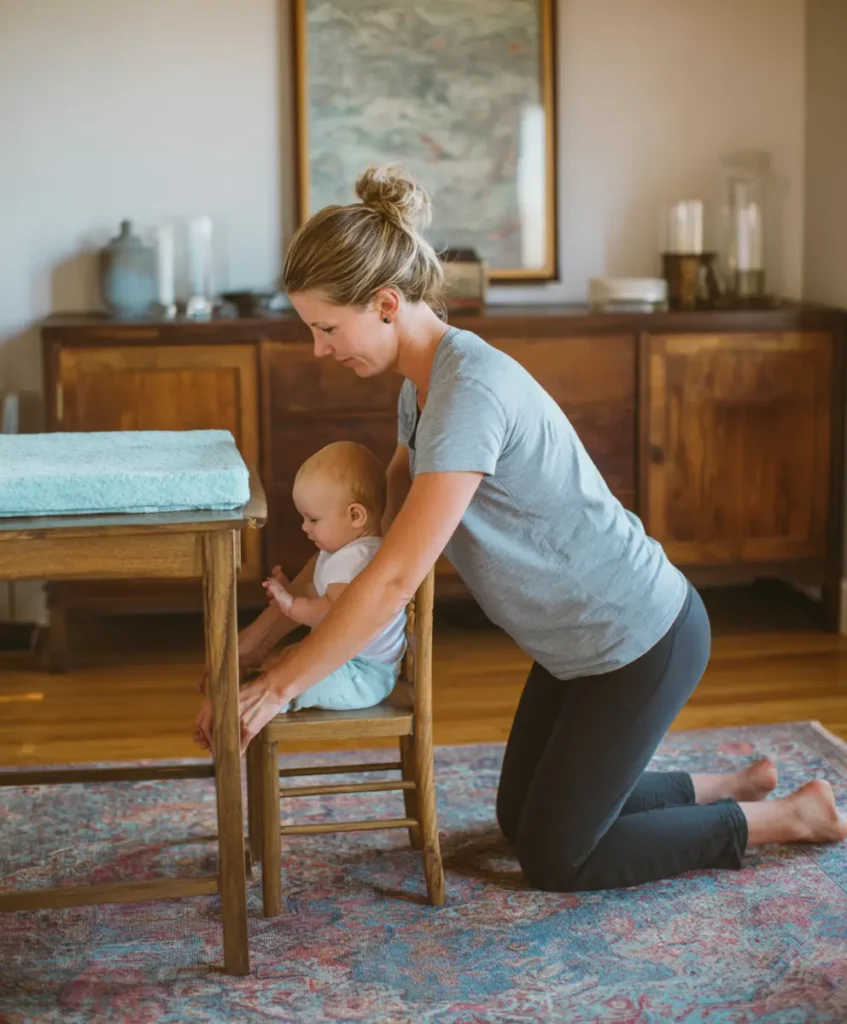
Week-by-Week Bending Recovery Timeline
This timeline is based on surgical healing patterns, obstetric guidelines, and postpartum rehabilitation standards.
📆 Week 1–2: Avoid All Bending
During the first two weeks, your body is focused on foundational healing. The fascia is at its weakest, the incision is fresh, and tissues are vulnerable.
Why you should avoid bending now
- Internal sutures are still stabilizing
- Incision edges have not fully sealed
- Risk of reopening or infections is highest
- Pain increases when bending from the waist
What to do instead
- Use your knees: squat instead of folding forward
- Use tools: long-handled grabbers, elevated baby stations
- Keep items at waist height: avoid reaching down
- Accept help: especially with older children or pets
Focus this week on:
- Pain control
- Minimal movement
- Incision care
- Adequate rest and hydration
📆 Week 3–4: Gentle Movement Introduction
By this stage, the skin incision is stronger, swelling decreases, and discomfort begins to improve. However, the fascia—the most important layer—still needs protection.
How to bend safely at this stage
- Only perform supported or partial bending
- Use a hand on your thigh or a sturdy surface
- Keep your back straight, hinge slightly, and avoid twisting
- Move slowly and stop at the first sign of discomfort
Stop immediately if you feel:
- Sharp pulling
- Burning around the incision
- Increased redness or swelling
- New discharge from the wound
Allowable activities
- Light walking
- Very mild bending only if absolutely necessary
- Picking up lightweight items using squat technique
📆 Week 5–6: Modified Bending with Caution
Most women start regaining strength around this time. Pain is minimal, the uterus has healed significantly, and the fascia is gaining stability.
Safe techniques now include:
- Bend at your knees, not your waist
- Keep chest lifted and core lightly engaged
- Hold a pillow or folded towel against the incision for comfort
- Exhale during movement to reduce abdominal pressure
What you can begin to do
- Picking up small objects
- Organizing low shelves if movement is gentle
- Caring for older children with caution
Avoid:
- Heavy lifting
- Deep forward folds
- Rapid or repetitive bending
📆 Week 6–8+: Full Movement Possible With Medical Clearance
The 6-week postpartum appointment is the standard checkpoint for assessing healing. If your doctor approves and you feel comfortable, this window is when most women return to fuller, safer bending motions.
Why you still need caution
- Internal healing continues for months
- Full strength of fascia isn’t regained until 3–4 months
- Pushing too fast increases risk of hernia
How to progress safely
- Start with light bending
- Move slowly, avoid sudden motions
- Increase range of motion gradually
- Combine bending with pelvic-floor-friendly breathing
Every woman heals differently—your body’s signals matter more than the calendar.
Safe Bending Techniques
Learning proper biomechanics protects your incision, core, and pelvic floor.
1. Bend at the knees, not your waist
Squat down with your hips back as if sitting on a chair.
2. Keep your spine neutral
Avoid rounding your back or folding deeply.
3. Engage core gently
A 10–20% activation protects the healing tissues.
4. Use support
Hold onto a table, crib edge, or bed for balance.
5. Avoid lifting more than 10–15 lbs
(Unless cleared by your provider.)

Daily Activities: Do’s and Don’ts
✔️ What You Can Do
- Change diapers at waist-level stations
- Take short, slow walks
- Shower, dress, and move gently
- Sit down to pick up objects instead of bending
❌ What to Avoid
- Cleaning floors
- Laundry baskets
- Heavy grocery bags
- Twisting movements while bending
- Sudden or repetitive bending
Tip: Set up your home to minimize bending
- Keep baby essentials elevated
- Use a rolling cart for supplies
- Keep laundry baskets on a table instead of the floor
- Use grabbers for dropped items
Red Flags: When to Call Your Doctor
When Can I Start Bending After a C-Section
Seek medical attention if you notice:
- Fever or chills
- Redness, warmth, or discharge from incision
- Increasing pain while bending
- Separation of the incision
- A bulge that suggests hernia
- Dizziness or fainting when bending
- Bleeding that worsens with movement
Supporting Your Recovery
1. Compression Garments / Abdominal Binders
Help reduce swelling, support tissues, and improve comfort during gentle movement.
2. Pelvic Floor & Core Re-Engagement
Light exercises prescribed by a postpartum physical therapist can speed recovery and protect muscles during bending.
3. Nutrition
Increase protein, hydration, fiber, and iron to support tissue repair.
4. Rest
Sleep and frequent rest periods allow your body to heal properly.
When Can I Start Bending After a C-Section Expert Tips for Recovery
- “Slow is smooth, and smooth is fast.”
Healing slowly and correctly prevents complications later. - Don’t compare yourself to others—each recovery is unique.
- Support your body with pillows, ergonomic tools, and gentle movement.
- Never ignore pain; it is your body’s communication system.

Conclusion About When Can I Start Bending After a C-Section
When Can I Start Bending After a C-Section is a gradual process influenced by how your internal tissues heal. Most women can resume bending safely between 4 and 8 weeks, but the exact timeline varies based on surgical technique, personal recovery speed, and medical guidance.
Listening to your body, using proper biomechanics, and progressing slowly allows you to heal fully while protecting your incision and long-term abdominal health.
Written by a Gynecologist based on medical experience and scientific evidence to help you make informed decisions about when can i start bending after a c-section