
Newborn skin flaking is a very common finding during the first days and weeks of life. Many parents notice peeling or shedding of their baby’s skin shortly after birth and worry that something may be wrong. In reality, newborn skin flaking is usually a normal physiological process that reflects the baby’s adaptation to life outside the womb.
Understanding the reasons behind newborn skin flaking, knowing how to care for delicate neonatal skin, and recognizing when peeling may indicate a medical condition can help parents feel reassured and confident during this early stage of life.
What Is Newborn Skin Flaking?
Newborn skin flaking refers to the peeling or shedding of the outermost layer of a newborn’s skin. It typically appears as dry, flaky patches or fine sheets of peeling skin. This process most often begins within the first few days after birth and may last up to two or three weeks.
In healthy infants, newborn skin flaking is not painful and does not cause itching or discomfort. The skin underneath usually looks smooth and healthy, without redness or inflammation.
Why Newborn Skin Flaking Occurs
Loss of Vernix Caseosa
Before birth, a baby’s skin is covered with vernix caseosa, a protective substance that moisturizes and shields the skin. After delivery, vernix is gradually removed, and the skin is suddenly exposed to air. Newborn skin flaking occurs as the skin renews itself after losing this natural protection.
Immature Skin Barrier
Newborn skin is thinner and more fragile than adult skin. The skin barrier, which helps retain moisture and protect against irritants, is still developing. Because of this immaturity, water is lost more easily through the skin, leading to dryness and peeling. This immaturity plays a central role in newborn skin flaking.
Gestational Age
Newborn skin flaking is more common in full-term and post-term babies. These infants usually have less vernix at birth, making peeling more noticeable. Premature babies often retain more vernix and may show less flaking initially.

Common Areas Affected
Newborn skin flaking can affect different parts of the body, but it is most commonly seen on:
- Hands and feet
- Ankles and wrists
- Arms and legs
- Abdomen
- Occasionally the face
The peeling may appear patchy or widespread but is usually symmetrical.
Is Newborn Skin Flaking Normal?
Yes, in the vast majority of cases, newborn skin flaking is completely normal. It is considered a natural part of postnatal skin adaptation. Almost all newborns experience some degree of peeling, even if it is mild.
Physiological newborn skin flaking usually resolves on its own within two to three weeks as the skin barrier matures and moisture retention improves.
Conditions That May Be Associated With Skin Peeling
While newborn skin flaking is usually harmless, peeling can sometimes be associated with specific conditions.
Cradle Cap
Cradle cap causes greasy, yellowish scales on the scalp and may sometimes extend to the forehead or behind the ears. Unlike typical newborn skin flaking, cradle cap appears thicker and more localized.
Atopic Dermatitis (Eczema)
Eczema may cause dry, flaky skin with redness and itching. Unlike normal newborn skin flaking, eczema often persists and may worsen over time.
Genetic Skin Disorders
Rare inherited conditions, such as ichthyosis, can cause persistent and excessive skin peeling. In these cases, newborn skin flaking does not resolve spontaneously and may be accompanied by thickened or cracked skin.
How to Care for Newborn Skin Flaking
Most cases of newborn skin flaking do not require medical treatment. Gentle skincare is usually sufficient.
Bathing Practices
- Use lukewarm water
- Limit bathing to a few times per week
- Keep baths short
- Use mild, fragrance-free cleansers
Excessive bathing can worsen newborn skin flaking by stripping natural oils.
Moisturizing
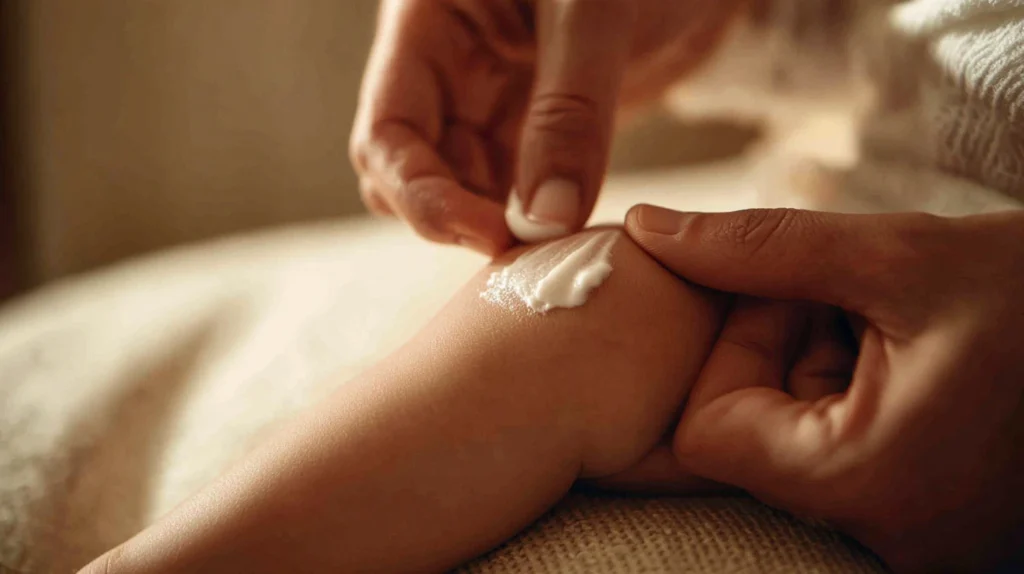
Applying a gentle, fragrance-free moisturizer can help reduce dryness. Simple emollients are usually effective. Moisturizers should be applied after bathing while the skin is still slightly damp.
Avoiding Irritants
- Avoid scented lotions and wipes
- Use hypoallergenic laundry detergents
- Dress the baby in soft, breathable fabrics
Reducing irritation helps support the healing of newborn skin flaking.
Environmental Measures
Dry indoor air can worsen peeling. Using a humidifier may help maintain skin hydration.
What Should Be Avoided
- Do not scrub peeling skin
- Do not manually remove flakes
- Do not use adult skincare products
- Do not apply medicated creams without medical advice
Improper handling may damage the delicate skin beneath the peeling layer.
When to Seek Medical Advice
Medical evaluation is recommended if:
- Newborn skin flaking persists beyond three weeks
- The skin becomes red, swollen, or painful
- There is bleeding, cracking, or discharge
- The baby appears uncomfortable or unusually irritable
- Peeling is associated with other symptoms
These signs may indicate an underlying condition that requires treatment.

Prognosis
For normal newborn skin flaking, the prognosis is excellent. The condition resolves naturally as the skin matures. Once peeling stops, the skin becomes soft and resilient. Normal newborn skin flaking does not increase the risk of future skin disease.
Key Points for Parents
- Newborn skin flaking is extremely common
- It is usually a normal physiological process
- Gentle skincare is usually enough
- Most cases resolve within a few weeks
- Persistent or inflamed peeling should be evaluated
Frequently Asked Questions
What can I put on my newborn’s peeling skin?
For normal newborn skin flaking, a gentle, fragrance-free moisturizer is usually sufficient. Simple emollients such as petroleum-based ointments or infant creams help protect the skin barrier and reduce dryness. Harsh soaps, scented products, and medicated creams should be avoided unless prescribed by a healthcare professional.
Is it normal for my newborn’s skin to start flaking?
Yes, it is completely normal. Newborn skin flaking is a common physiological process that occurs as a baby’s skin adapts to life outside the womb. It usually begins within the first few days after birth and resolves on its own within two to three weeks.
Is it normal for my newborn to have dry, flaky skin?
Yes. Dry, flaky skin is very common in newborns because their skin barrier is still developing. In most cases, this dryness is temporary and improves naturally with gentle skincare and time.
What are the 7 danger signs in a newborn baby?
Parents should seek urgent medical care if a newborn shows any of the following signs:
Poor feeding or refusal to feed
Fever or abnormally low body temperature
Difficulty breathing or rapid breathing
Blue or pale skin color
Lethargy or reduced movement
Persistent vomiting or severe diarrhea
Convulsions or unusual body movements
To enrich this discussion, we have relied on evidence-based information from reputable medical publications and expert-reviewed health platforms.
Conclusion
Newborn skin flaking is a normal and expected part of early life for many infants. Although it may initially cause concern, it most often reflects healthy skin adaptation rather than illness. With patience, gentle care, and awareness of warning signs, parents can confidently support their baby’s skin health during this transitional period.
This article draws on trusted medical insights from leading health authorities and well-established clinical resources to ensure accuracy and reliability.