
Choosing healthy pregnancy snacks can make a real difference in how you feel day to day. Pregnancy often brings stronger hunger cues, nausea, fatigue, heartburn, constipation, and changing food preferences. Well-planned snacks help bridge the gaps between meals, stabilize energy, support steady blood sugar, and contribute important nutrients for both you and your baby. Instead of thinking of snacking as “extra,” it helps to view it as a simple strategy to meet higher nutritional needs in small, manageable portions.
A good snack in pregnancy is not about perfection. It’s about consistency, safety, and smart nutrient choices. The best healthy pregnancy snacks are easy to prepare, satisfying, and built from foods that provide protein, fiber, healthy fats, and key micronutrients such as iron, calcium, vitamin D, folate, iodine, and choline. With a few staple ingredients at home, you can build snack combinations that support fetal growth and help you feel more comfortable across all trimesters.
What makes a snack “healthy” during pregnancy?
A reliable rule is to combine:
- A fiber-rich carbohydrate (fruit, whole grains, beans, vegetables)
- A protein source (yogurt, eggs, cheese, poultry, fish, tofu, legumes)
- A healthy fat (nuts, seeds, olive oil, avocado)
This trio is the backbone of most healthy pregnancy snacks because it tends to keep you full longer, prevent energy crashes, and reduce the temptation to reach for overly sugary or highly processed foods. Fiber supports digestion and helps constipation, protein supports maternal tissue changes and fetal growth, and healthy fats contribute to satiety and overall nutritional balance.
Pregnancy snack needs by trimester
First trimester: Many women struggle with nausea, food aversions, and fatigue. Small, frequent snacks can help prevent an empty stomach, which often worsens nausea. In this trimester, the “best snack” may simply be the one you can tolerate. Bland options, cold foods, and simple carb-protein pairings can be especially helpful. Even basic healthy pregnancy snacks like crackers with cheese or toast with nut butter can be a win when nausea is strong.
Second trimester: Appetite often improves. This is a good time to build routine: two to three snacks daily if needed, each with protein and fiber. Choosing healthy pregnancy snacks consistently can help you meet rising nutrient demands without feeling overly full at main meals.
Third trimester: Heartburn and early fullness are common due to reduced stomach capacity. Smaller portions more frequently can feel better than large meals. Many women do well with lighter, nutrient-dense healthy pregnancy snacks earlier in the evening to reduce reflux at night.
Food safety matters with snacks
Pregnancy increases susceptibility to foodborne illness and the potential for more severe complications. Snack choices should prioritize safe handling and safe products:
- Choose pasteurized milk, yogurt, and cheeses.
- Keep cold foods cold and respect expiration dates.
- Wash fruits and vegetables thoroughly.
- Heat high-risk ready-to-eat meats until steaming hot if you choose to eat them.
- Avoid raw or undercooked eggs, fish, and meats.
Safety is part of the definition of healthy pregnancy snacks. A nutritious snack is only “healthy” if it is also safe for pregnancy.
20 Healthy Pregnancy Snacks You Can Rotate All Week
Below are practical snack ideas with simple explanations of why they work. These options are flexible: change ingredients to match your taste, nausea triggers, or cultural preferences.
1) Apple slices with peanut or almond butter
A classic among healthy pregnancy snacks: fiber from the fruit plus protein and fat from the nut butter. It travels well and requires minimal preparation.
2) Greek yogurt with berries and chia seeds
Greek yogurt adds protein and calcium. Berries provide fiber and antioxidants. Chia contributes fiber and healthy fats.
3) Cottage cheese with pineapple or cucumber
Cottage cheese is high in protein. Pair with fruit for sweetness or cucumber for a savory option.
4) Hummus with carrots, cucumber, and whole-grain pita
Hummus provides plant protein and healthy fat; vegetables add fiber and hydration.
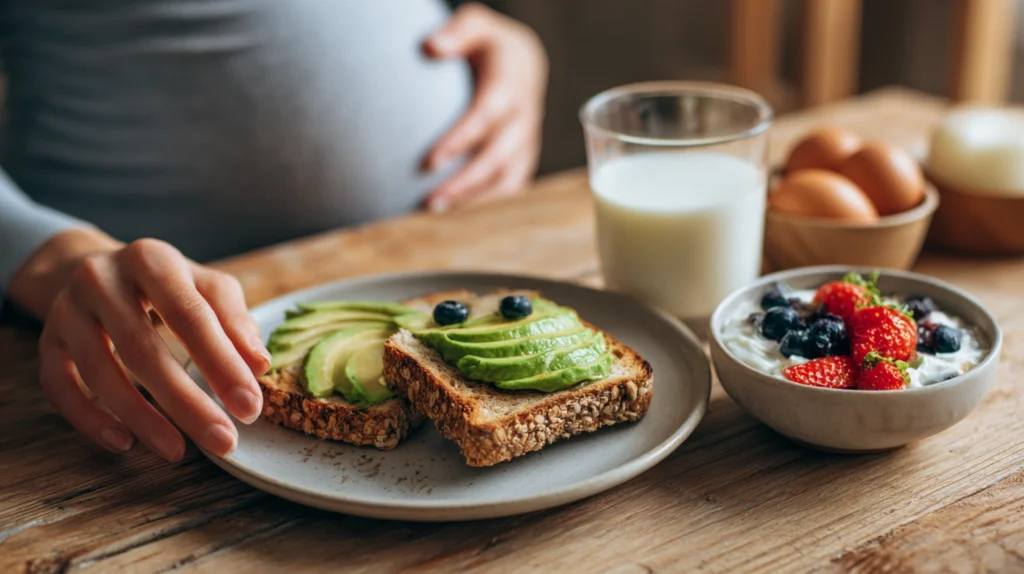
5) Avocado toast on whole-grain bread
Avocado provides healthy fats and fiber. Whole-grain bread supports sustained energy.
6) Hard-boiled eggs with cherry tomatoes
Eggs are rich in protein and choline. Tomatoes add freshness and vitamin C.
7) Oatmeal topped with walnuts and banana
Oats support digestion; walnuts add healthy fats; banana adds gentle sweetness and potassium.
8) Edamame with a small fruit
Edamame offers protein and fiber. Pair with an orange or kiwi for vitamin C.
9) Smoothie: milk or yogurt, frozen berries, and oats
A smoothie can be one of the easiest healthy pregnancy snacks when chewing feels difficult. Add oats for fiber and staying power.
10) Cheese cubes with whole-grain crackers and grapes
This is essentially a “mini meal” snack: protein and calcium from cheese, fiber from crackers, and hydration from fruit.
11) Roasted chickpeas
Crunchy, satisfying, and portable. Great for women who crave chips but want more nutrition.
12) Banana with tahini
Tahini adds healthy fats and some protein; banana is gentle on nausea and easy to digest.
13) A small bowl of lentil soup
Warm, comforting, and rich in fiber and plant protein—especially useful when appetite is low.
14) Popcorn plus a protein side
Popcorn can fit into healthy pregnancy snacks when paired with protein, such as a cheese stick, yogurt, or a small handful of nuts.
15) Trail mix: nuts, seeds, and dried fruit
Choose unsalted nuts and modest portions of dried fruit. This snack is calorie-dense, so a small handful is enough.
16) Whole-grain toast with ricotta and honey (optional)
Ricotta offers protein and calcium. A drizzle of honey can help if you need more calories, but keep it light.
17) Tuna or salmon salad on crackers (pregnancy-safe choices)
If you eat fish, choose options consistent with pregnancy guidance on mercury and portioning. Fish can be a valuable protein source.
18) Yogurt with granola (lower sugar)
Convenient and satisfying. This is one of the simplest healthy pregnancy snacks for busy days.
19) Sliced pear with cheese
A sweet-savory pairing that balances carbs with protein and fat.
20) Baked sweet potato with yogurt
Sweet potato provides fiber and slow-release carbs; yogurt adds protein.
Snacks for Common Pregnancy Symptoms
Nausea and vomiting
- Eat something small soon after waking.
- Choose dry, bland snacks first, then add protein as tolerated.
- Cold snacks may be easier because they smell less.
- Keep a simple list of “safe foods” and build healthy pregnancy snacks from them.
Helpful examples: toast with nut butter, yogurt, banana, crackers with cheese, smoothies.
Heartburn and reflux
- Smaller snacks more frequently often feel better.
- Avoid heavy, greasy, or very spicy snacks late in the day.
- Try lighter healthy pregnancy snacks such as yogurt, oatmeal, banana, or a small sandwich.
Constipation
- Increase fiber gradually and drink enough water.
- Add fruits like prunes, pears, and berries.
- Beans, oats, chia, and vegetables are excellent foundations for healthy pregnancy snacks.
Fatigue and energy crashes
Energy dips often follow snacks that are mostly sugar or refined carbs. Add protein and fat to slow digestion:
- fruit + nut butter
- yogurt + nuts
- eggs + whole-grain toast
These combinations help keep healthy pregnancy snacks steady and satisfying.
Gestational diabetes or blood sugar concerns
If you have gestational diabetes or are at higher risk, snacks should be planned carefully with your clinician or dietitian. A general approach is to avoid carb-only snacks and favor balanced combinations:
- yogurt + nuts
- hummus + vegetables
- eggs + whole-grain crackers
Many healthy pregnancy snacks naturally fit this pattern when built around protein and fiber.

How to Portion Snacks Without Overthinking It
You don’t need perfect measurements. Use simple portion cues:
- Protein: a palm-sized amount (or a single serving like one yogurt)
- Carb: a fist-sized fruit or a slice of whole-grain bread
- Fat: a thumb-sized portion of nut butter or a small handful of nuts
Most women do well with one to three snacks daily depending on appetite, nausea, activity, and trimester. The purpose of healthy pregnancy snacks is to support you—if a snack makes nausea worse or triggers reflux, adjust the ingredients or timing.
A Simple One-Day Snack Plan
Here’s an easy structure you can copy:
- Mid-morning: Greek yogurt + berries + chia
- Afternoon: Hummus + carrots + whole-grain pita
- Evening: Cottage cheese + fruit (or oatmeal with walnuts)
This pattern includes protein at each snack, supporting stable energy and helping many women feel more comfortable. It also keeps healthy pregnancy snacks varied so you don’t get bored.
Frequently Asked Questions About Pregnancy Snacks
What are some good snacks when pregnant?
Good snacks during pregnancy combine protein, fiber, and healthy fats to support energy and nutrient needs. Examples include yogurt with fruit, apple slices with nut butter, hummus with vegetables, eggs with whole-grain toast, or a smoothie made with milk and berries. These options help control hunger, stabilize blood sugar, and provide essential nutrients for both mother and baby.
What is the healthiest thing to eat while pregnant?
There is no single “healthiest” food, but a balanced diet rich in vegetables, fruits, whole grains, lean proteins, dairy or fortified alternatives, and healthy fats is ideal. Foods providing iron, calcium, folate, protein, and omega-3 fatty acids are especially important to support fetal development and maternal health.
What can I eat for evening snacks when pregnant?
Evening snacks should be light, nourishing, and easy to digest, especially to reduce heartburn. Good options include yogurt with fruit, cottage cheese, oatmeal, a banana with nut butter, or whole-grain toast with avocado. These snacks provide satiety without being too heavy before sleep.

Final Takeaway
The best healthy pregnancy snacks are safe, satisfying, and built from real foods that support your body’s changing needs. Aim for a balance of fiber-rich carbs, protein, and healthy fats, and adjust choices to your trimester and symptoms. Keep a short list of go-to snacks at home, pack one option when you leave the house, and don’t hesitate to repeat what works. Consistency matters more than variety on hard days—and on good days, rotating a few nutritious options can help you meet pregnancy needs with less stress.
This article draws on trusted insights from leading pregnancy and parenting resources to ensure accurate, evidence-based guidance for expectant mothers.