
pregnancyfollowup.com

⁠Baby Care

Newborn Skin Flaking

Newborn Skin Flaking: Medical Causes, Care, and Parental Guidance

Newborn skin flaking is a very common finding during the first days and weeks of life. Many parents notice peeling or shedding of their baby’s skin shortly after birth and worry that something may be wrong. In reality, newborn skin flaking is usually a normal physiological process that reflects the baby’s adaptation to life outside the womb. Understanding the reasons behind newborn skin flaking, knowing how to care for delicate neonatal skin, and recognizing when peeling may indicate a medical condition can help parents feel reassured and confident during this early stage of life. What Is Newborn Skin Flaking? Newborn skin flaking refers to the peeling or shedding of the outermost layer of a newborn’s skin. It typically appears as dry, flaky patches or fine sheets of peeling skin. This process most often begins within the first few days after birth and may last up to two or three weeks. In healthy infants, newborn skin flaking is not painful and does not cause itching or discomfort. The skin underneath usually looks smooth and healthy, without redness or inflammation. Why Newborn Skin Flaking Occurs Loss of Vernix Caseosa Before birth, a baby’s skin is covered with vernix caseosa, a protective substance that moisturizes and shields the skin. After delivery, vernix is gradually removed, and the skin is suddenly exposed to air. Newborn skin flaking occurs as the skin renews itself after losing this natural protection. Immature Skin Barrier Newborn skin is thinner and more fragile than adult skin. The skin barrier, which helps retain moisture and protect against irritants, is still developing. Because of this immaturity, water is lost more easily through the skin, leading to dryness and peeling. This immaturity plays a central role in newborn skin flaking. Gestational Age Newborn skin flaking is more common in full-term and post-term babies. These infants usually have less vernix at birth, making peeling more noticeable. Premature babies often retain more vernix and may show less flaking initially. For gentle, doctor-approved tips on easing breathing discomfort in newborns, you may find our detailed guide on helping a congested newborn especially helpful. Common Areas Affected Newborn skin flaking can affect different parts of the body, but it is most commonly seen on: The peeling may appear patchy or widespread but is usually symmetrical. Is Newborn Skin Flaking Normal? Yes, in the vast majority of cases, newborn skin flaking is completely normal. It is considered a natural part of postnatal skin adaptation. Almost all newborns experience some degree of peeling, even if it is mild. Physiological newborn skin flaking usually resolves on its own within two to three weeks as the skin barrier matures and moisture retention improves. Conditions That May Be Associated With Skin Peeling While newborn skin flaking is usually harmless, peeling can sometimes be associated with specific conditions. Cradle Cap Cradle cap causes greasy, yellowish scales on the scalp and may sometimes extend to the forehead or behind the ears. Unlike typical newborn skin flaking, cradle cap appears thicker and more localized. Atopic Dermatitis (Eczema) Eczema may cause dry, flaky skin with redness and itching. Unlike normal newborn skin flaking, eczema often persists and may worsen over time. Genetic Skin Disorders Rare inherited conditions, such as ichthyosis, can cause persistent and excessive skin peeling. In these cases, newborn skin flaking does not resolve spontaneously and may be accompanied by thickened or cracked skin. If you’re unsure about feeding routines and comfort measures, our article explaining when to stop burping a baby offers clear, practical guidance for parents. How to Care for Newborn Skin Flaking Most cases of newborn skin flaking do not require medical treatment. Gentle skincare is usually sufficient. Bathing Practices Excessive bathing can worsen newborn skin flaking by stripping natural oils. Moisturizing Applying a gentle, fragrance-free moisturizer can help reduce dryness. Simple emollients are usually effective. Moisturizers should be applied after bathing while the skin is still slightly damp. Avoiding Irritants Reducing irritation helps support the healing of newborn skin flaking. Environmental Measures Dry indoor air can worsen peeling. Using a humidifier may help maintain skin hydration. As your baby grows, you may also enjoy exploring our carefully curated baby food recipes, designed to support healthy development at each stage. What Should Be Avoided Improper handling may damage the delicate skin beneath the peeling layer. When to Seek Medical Advice Medical evaluation is recommended if: These signs may indicate an underlying condition that requires treatment. Prognosis For normal newborn skin flaking, the prognosis is excellent. The condition resolves naturally as the skin matures. Once peeling stops, the skin becomes soft and resilient. Normal newborn skin flaking does not increase the risk of future skin disease. Key Points for Parents Frequently Asked Questions To enrich this discussion, we have relied on evidence-based information from reputable medical publications and expert-reviewed health platforms. Conclusion Newborn skin flaking is a normal and expected part of early life for many infants. Although it may initially cause concern, it most often reflects healthy skin adaptation rather than illness. With patience, gentle care, and awareness of warning signs, parents can confidently support their baby’s skin health during this transitional period. This article draws on trusted medical insights from leading health authorities and well-established clinical resources to ensure accuracy and reliability.

Newborn Skin Flaking: Medical Causes, Care, and Parental Guidance Read More »

How to Help a Congested Newborn

How to Help a Congested Newborn Safely: Pediatric-Approved Relief Tips for Parents

Nasal congestion is one of the most common concerns during the newborn period. Many parents search for how to help a congested newborn when they hear noisy breathing, notice feeding difficulties, or see their baby struggling to sleep comfortably. While congestion can sound alarming, it is usually mild and temporary. Understanding its causes and safe management options can significantly improve your baby’s comfort while ensuring their safety. This article explains how to help a congested newborn using evidence-based, pediatric-approved methods, what to avoid, and when to seek medical care. Why Newborns Develop Nasal Congestion Newborns are particularly vulnerable to nasal congestion because their nasal passages are very small and narrow. Even a tiny amount of mucus or swelling can make breathing sound loud or difficult. Parents learning how to help a congested newborn should first understand why congestion occurs. Common causes include: In most cases, congestion is not dangerous and improves with gentle care. Signs and Symptoms of a Congested Newborn Parents often notice the following symptoms when trying to figure out how to help a congested newborn: A congested newborn may sound uncomfortable but still breathe normally. Observing feeding and breathing patterns is key. For practical ideas on nourishing your baby as they grow, you may find our collection of baby food recipes especially helpful. How to Help a Congested Newborn at Home The main goal when learning how to help a congested newborn is to gently clear nasal passages while protecting delicate tissues. Treatment should always be conservative and safe. 1. Saline Nasal Drops Saline nasal drops are the safest and most effective first-line treatment for congestion. They work by: How to use saline drops safely: Saline drops can be used several times daily, especially before feeding or sleep. They are essential when learning how to help a congested newborn safely. 2. Gentle Nasal Suction After saline drops, gentle suction helps remove loosened mucus. Safe suction tips: Excessive suction can irritate the nasal lining, so moderation is important when practicing how to help a congested newborn. 3. Humidified Air Dry air worsens nasal congestion. A cool-mist humidifier adds moisture to the air, helping nasal secretions stay thin and easier to clear. Best practices include: Humidified air is one of the most effective long-term strategies for how to help a congested newborn, especially during sleep. 4. Steam Exposure from a Warm Bathroom Brief exposure to warm, humid air can help loosen nasal mucus. To do this safely: This method is often helpful before bedtime when exploring how to help a congested newborn sleep more comfortably. 5. Proper Feeding and Hydration Hydration thins mucus naturally. For newborns, this means frequent breastfeeding or formula feeding. Helpful tips: Feeding comfort is an important indicator when assessing how to help a congested newborn effectively. If you’re wondering how feeding habits evolve over time, our guide on when you can stop burping a baby offers clear, reassuring insights. Safe Sleep Practices for a Congested Newborn Parents often ask whether sleep position should change due to congestion. The answer is no. When considering how to help a congested newborn, always remember: Although congestion may sound worse when lying flat, safe sleep practices protect the airway and reduce serious risks. What to Avoid When Helping a Congested Newborn Understanding what not to do is essential when learning how to help a congested newborn. Avoid: These measures can be harmful and do not improve recovery. To better understand certain behaviors you may notice as your baby develops, we also explain why babies grind their teeth and when it’s a concern. When to Seek Medical Advice While most congestion is mild, parents should know when medical evaluation is necessary. Contact a healthcare provider if: Understanding how to help a congested newborn also means recognizing when home care is no longer enough. Emergency Warning Signs Seek urgent medical care if your newborn has: These symptoms are not normal congestion and require immediate attention. Is Congestion Normal in Newborns? Yes. Many newborns sound congested even without illness. Narrow nasal passages and immature breathing coordination often cause noisy breathing. As babies grow, these sounds usually resolve naturally. Parents learning how to help a congested newborn should focus on comfort rather than eliminating every sound. Preventing Congestion When Possible Although congestion cannot always be prevented, these steps reduce risk: Prevention supports long-term success in how to help a congested newborn. Emotional Support for Parents Caring for a congested newborn can be exhausting and anxiety-provoking. Reassurance is important: most cases are harmless and temporary. With proper care and patience, symptoms improve. Knowing how to help a congested newborn gives parents confidence and reduces unnecessary worry. Frequently Asked Questions About Newborn Nasal Congestion To ensure accuracy and reliability, we have drawn upon evidence-based recommendations from reputable pediatric and child-health organizations. Conclusion Understanding how to help a congested newborn allows parents to provide safe, effective relief while protecting their baby’s health. Saline drops, gentle suction, humidified air, proper feeding, and strict safe-sleep practices form the foundation of care. Avoid medications and unsafe interventions, monitor symptoms closely, and seek medical advice when necessary. With gentle support and time, most newborn congestion resolves completely. This article is informed by established pediatric guidance and trusted medical resources, including insights from leading children’s health institutions.

How to Help a Congested Newborn Safely: Pediatric-Approved Relief Tips for Parents Read More »

When Do You Stop Burping a Baby

When Do You Stop Burping a Baby? A Medical and Developmental Guide for Parents

Introduction About When Do You Stop Burping a Baby Burping is one of the earliest caregiving habits parents learn when caring for a newborn. It is often recommended to reduce gas, discomfort, and fussiness after feeding. However, as babies grow and feeding patterns change, many parents begin to wonder when do you stop burping a baby and whether the practice remains necessary beyond the early months. Understanding the physiology of infant digestion and normal developmental milestones can help answer this common question with confidence. This article provides a medically grounded explanation of why babies are burped, how long burping is usually helpful, and the signs that indicate a baby no longer needs assistance. Rather than focusing on rigid rules, the goal is to help parents make informed decisions based on their baby’s individual development. Why Burping Is Recommended in Early Infancy Babies swallow air while feeding, especially during the newborn period. This happens because feeding coordination between sucking, swallowing, and breathing is still immature. Air can enter the stomach whether the baby is breastfed or bottle-fed, particularly if milk flow is fast or the latch is shallow. Trapped air can stretch the stomach and cause pressure, leading to fussiness, arching of the back, pulling away during feeds, or increased spitting up. Burping helps release this swallowed air, often improving comfort and allowing the baby to feed more calmly. In early infancy, burping is considered a comfort-based practice rather than a strict medical requirement. Some babies clearly benefit from it, while others show little discomfort even without regular burping. How Feeding Development Changes Over Time The need for burping is closely related to feeding development. During the first weeks of life, babies feed in a mostly reclined position and lack strong head and trunk control. This positioning makes it easier for air to become trapped in the stomach. As babies grow, several changes reduce the need for burping: These developmental changes explain why the question when do you stop burping a baby does not have a single answer but instead depends on each baby’s progress. When Do You Stop Burping a Baby? Typical Age Expectations Parents often want a clear timeline for when burping is no longer needed. While every baby is different, most follow a similar general pattern. Common Age Ranges For many families, the answer to when do you stop burping a baby naturally falls between four and six months, when feeding becomes smoother and babies remain comfortable without assistance. For a deeper understanding of how oral anatomy can influence feeding and comfort in infants, you may find this detailed guide on lip-tie in babies helpful. Behavioral Signs Your Baby May Be Ready Age alone should not determine when to stop burping. Observing your baby’s behavior is far more important. 1. Independent Burping If your baby frequently burps on their own during or after feeds, this suggests they can manage swallowed air independently. 2. Comfort After Feeding A baby who finishes feeding calmly and remains relaxed without signs of discomfort likely does not need help burping. 3. Reduced Fussiness and Arching When burping no longer changes your baby’s comfort level, it may no longer be necessary. 4. Improved Motor Control Babies who can hold their head up, sit with support, or roll over usually swallow less air and digest more efficiently. These signs are often more reliable than age when deciding when do you stop burping a baby. If you’re noticing unusual oral behaviors as your baby grows, this article on baby teeth grinding offers useful insights into possible causes and when to be concerned. Breastfed and Bottle-Fed Babies: Is There a Difference? Feeding method can influence how long burping is helpful. Breastfed Babies Breastfed babies often swallow less air, especially with a good latch and controlled milk flow. Some breastfed infants may stop needing burping earlier than bottle-fed babies. Bottle-Fed Babies Bottle-fed babies may swallow more air depending on nipple design, feeding position, and flow speed. As a result, burping may remain helpful slightly longer, though most still outgrow the need within the same general timeframe. Regardless of feeding method, the key factor remains the baby’s comfort. To ensure accuracy and clinical relevance, we have consulted well-established external references that complement and enrich the information shared in this piece. Reflux, Gas, and Special Situations Some babies experience more frequent reflux or gas, which may affect how long burping is useful. Reflux Babies with reflux may spit up often or appear uncomfortable after feeds. While burping does not treat reflux itself, gentle burping and upright positioning may reduce stomach pressure. In these cases, parents may continue burping longer than average. Gas and Sensitivity Some babies are naturally more sensitive to gas. Burping may remain helpful until the baby consistently shows comfort without it. Even in these situations, the decision about when do you stop burping a baby should be based on symptoms rather than habit. As feeding evolves beyond milk, you can explore these age-appropriate baby food recipes to support healthy nutrition during the weaning stage. Burping During Night Feeds Parents often question whether burping is still necessary during nighttime feeds. The same principles apply as during the day. If your baby remains comfortable without burping, it is usually safe to lay them down after feeding. Many older babies feed efficiently at night and fall asleep without needing to be burped. Does Burping Always Prevent Spit-Up? It is important to understand that burping does not prevent all spit-up. Some spitting up is normal and related to the immaturity of the digestive system, not trapped air. If a baby is comfortable, gaining weight, and feeding well, occasional spit-up is not a reason to continue burping indefinitely. How to Transition Away From Burping If you are unsure when do you stop burping a baby, a gradual approach is often helpful. Most parents find that burping fades out naturally as babies mature. When to Seek Medical Advice Burping habits alone should not cause concern. However, consult a healthcare professional if your

When Do You Stop Burping a Baby? A Medical and Developmental Guide for Parents Read More »

baby grinding teeth

Baby Grinding Teeth: Causes, Treatment, and Doctor’s Expert Advice for Parents

As a doctor with years of experience in pediatric and dental health, I often meet parents who become worried the first time they hear their baby grinding teeth. The sound can be loud, even alarming — a high-pitched scraping or squeaking noise that seems unnatural for such a tiny mouth. But in most cases, this behavior is completely normal and temporary. Understanding why baby grinding teeth happens and how to respond can help parents stay calm and protect their child’s developing smile. What Does “Baby Grinding Teeth” Mean? The expression baby grinding teeth refers to the habit of clenching or sliding the upper and lower teeth against each other. In medical terms, it’s called “bruxism.” Although it is commonly discussed in adults and older children, it can also appear in infants once their first baby teeth erupt. This behavior usually starts around 6 to 10 months of age, when babies have several teeth in both the upper and lower gums. At this stage, they begin to explore how their mouth works — chewing, biting, and experimenting with jaw movement. Grinding becomes part of that exploration process. As a doctor, I explain to parents that baby grinding teeth is often a developmental phase rather than a disease. Why Do Babies Grind Their Teeth? There are several possible reasons why baby grinding teeth occurs. The causes can be physical, emotional, or developmental. Based on my clinical experience and medical studies, the most common factors include the following: 1. Teething Discomfort Teething is one of the main reasons for baby grinding teeth. When a new tooth pushes through the gum, babies feel pressure, itching, or mild pain. Grinding may act as a natural self-soothing response. It relieves tension in the gums and jaw and helps the baby adapt to the new teeth. 2. Exploring New Sensations When babies first get teeth, they become fascinated by the new feeling of hard surfaces in their mouth. They rub their upper and lower teeth together simply to experiment. It’s part of discovering their body. This type of baby grinding teeth is harmless and usually stops once the novelty wears off. 3. Jaw and Bite Development As the jaw grows and the dental bite changes, babies may grind their teeth to find a comfortable position between upper and lower teeth. This is called occlusal adjustment. It’s a temporary adaptation process that disappears once the bite stabilizes. 4. Sleep Patterns Some babies grind their teeth while sleeping. This type of baby grinding teeth, known as sleep bruxism, may occur during light sleep phases or when the baby transitions between sleep stages. It is often harmless, but in a few cases, it can be associated with sleep disturbances or breathing issues. 5. Stress or Emotional Factors Although stress seems like an adult problem, babies can also experience emotional tension — for example, due to separation from parents, change in routine, or discomfort. Grinding teeth can be an unconscious way to release that tension. In my medical practice, I have noticed that baby grinding teeth often appears more frequently during emotional changes or illness. 6. Airway or Breathing Issues In some cases, grinding can be related to airway obstruction or mouth breathing. Babies who snore, have enlarged tonsils, or show difficulty breathing during sleep may grind their teeth more often. These cases should be evaluated by a pediatrician or ENT specialist. How Common Is Baby Grinding Teeth? The habit of baby grinding teeth is surprisingly common. Research shows that up to half of all children experience teeth grinding at some point. In babies, it is usually a short-lived phase lasting a few weeks or months. Most children stop grinding once all baby teeth have erupted or when permanent teeth start appearing around age 6. From my own experience, I see about one in five babies showing noticeable grinding behavior during teething. Parents usually discover it at night or during naps when the room is quiet enough to hear the sound clearly. Is Baby Grinding Teeth Dangerous? In most cases, baby grinding teeth is not dangerous. The teeth are strong, and grinding for a few weeks rarely causes damage. However, prolonged or intense grinding can sometimes lead to issues such as: If you notice that your baby grinds teeth very loudly, seems uncomfortable, or shows visible wear on the teeth, it’s wise to consult your doctor or dentist. As a physician, I always recommend early evaluation if the behavior persists or if there are additional symptoms like sleep trouble or feeding problems. When to See a Doctor or Dentist You should consider seeing a medical professional if: As a doctor, I reassure parents that early consultation doesn’t necessarily mean there is something serious. It helps confirm whether the grinding is just part of normal development or needs treatment. What You Can Do at Home If your baby is grinding teeth, there are several simple things you can do to reduce discomfort and protect the teeth. 1. Relieve Teething Pain These actions can help reduce the urge for baby grinding teeth caused by teething discomfort. 2. Encourage Good Sleep Habits Create a calm sleep environment with consistent routines. Soft music, gentle rocking, and a dark room help babies sleep deeper and reduce grinding episodes. Regular sleep schedules are beneficial for overall neurological development. 3. Monitor and Record Keep a short diary: note when the grinding occurs, how often, and if there are any patterns (during teething, after stress, before naps). This helps your doctor identify triggers. 4. Protect Teeth and Jaw Make sure your baby’s mouth is clean. Start brushing gently with a baby toothbrush once the first tooth erupts. Visit a pediatric dentist around the first birthday. Early dental visits ensure that baby grinding teeth has not caused any enamel damage. 5. Manage Environmental Stressors Reduce noise, screen time, and overstimulation before bedtime. Babies are sensitive to emotional tension around them. Calm surroundings can lower the frequency of baby grinding teeth. My Medical Experience as a Doctor From my medical

Baby Grinding Teeth: Causes, Treatment, and Doctor’s Expert Advice for Parents Read More »

Lip Tie Baby

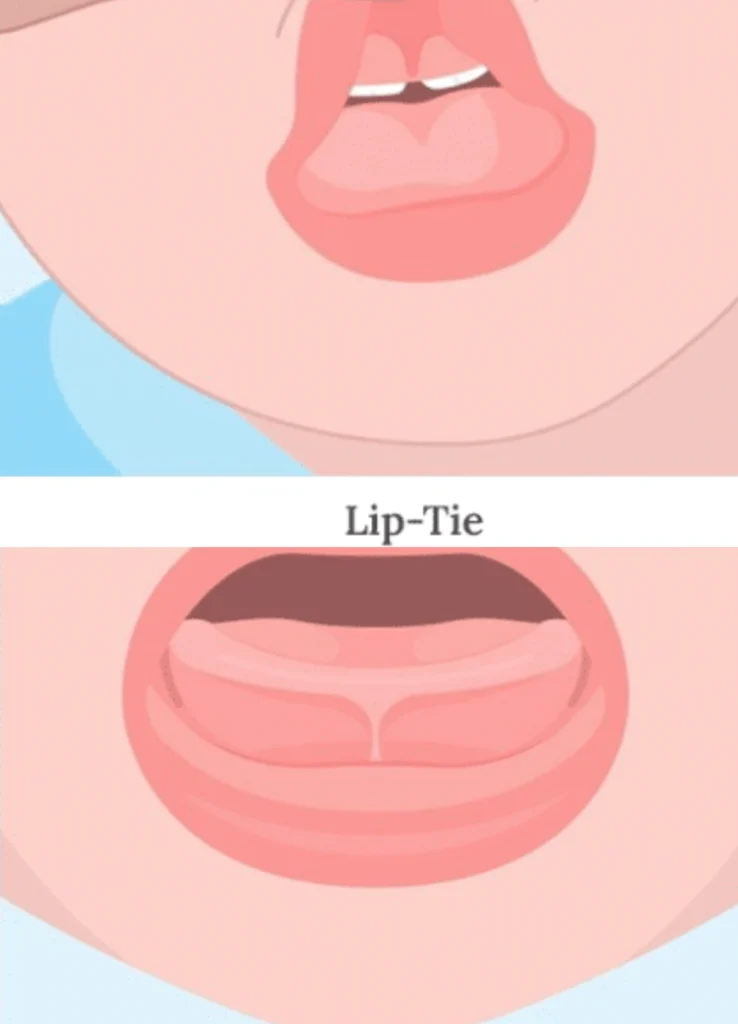
Lip Tie Baby: Clear, Evidence-Ground Guidance (Plus My Doctor’s Approach)

Parents often arrive in my clinic saying, “I think my lip tie baby can’t latch,” or “Someone told me we need a laser release.” The internet is full of dramatic photos and confident promises, but medicine asks for something more careful: function over appearance, and relief over hype. In this long, practical guide, I’ll explain what a lip tie is, what really matters during feeding, when procedures help, when they don’t, and how I personally evaluate and support families. You’ll also see exactly how I fold research, clinical reasoning, and compassionate counseling into a step-by-step plan for a lip tie baby—without shortcuts, and without pressure. What Is a Lip Tie (and Why the Name Confuses Families)? A lip tie is a description of the maxillary labial frenulum—the small band of tissue between the upper lip and the gum—when it appears tight, inserts low near the gum line, or seems to restrict how the lip flips upward during a latch. Every baby has a frenulum; variation is normal. The problem isn’t the presence of the tissue, but whether it creates a functional restriction for your lip tie baby during feeding. Parents are often shown grades or scales based on where the frenulum inserts. Those grades describe appearance, but appearance alone doesn’t decide if feeding will succeed. Many thriving babies have a prominent frenulum, while some struggling babies have a normal-looking one. That’s why the smartest first step for a lip tie baby is not a photo, but a careful observation of a real feed. Key idea: anatomy matters, but function rules. For a lip tie baby, the decision to treat or not to treat must be driven by latch quality, milk transfer, comfort, and growth—not by a number or a snapshot. Lip Tie vs. Tongue Tie: Why People Mix Them Up Tongue tie (ankyloglossia) refers to a tight lingual frenulum that limits tongue elevation or extension. Research on tongue tie and breastfeeding is broader than the research on lip ties, but even there, the data are mixed. Sometimes a lip tie baby also has a suspected tongue tie, and symptoms overlap: shallow latch, clicking sounds during feeds, prolonged feeding sessions, nipple pain, gassiness, or slow weight gain. Because both structures sit in the same small space and both affect latch mechanics, families naturally ask whether both need release. In practice, many feeding issues improve with skilled lactation support even when a frenulum looks tight. The lesson for a lip tie baby is simple: test function with hands-on help before assuming that tissue is the main cause. How I Evaluate a Lip Tie Baby in Clinic (My Doctor’s Process) When I meet a lip tie baby, I slow down and build a plan in five deliberate steps: This method respects science, protects families from unnecessary procedures, and—most importantly—gets relief. Many lip tie baby cases improve dramatically within 48–72 hours when latch and milk flow are optimized. Signs to Watch in a Lip Tie Baby (Function, Not Fear) A lip tie baby deserves a thoughtful assessment when you see: Each sign is a clue, not a verdict. Plenty of babies display one or two of these issues for reasons unrelated to a frenulum—such as a fast let-down, a sleepy newborn pattern, a bottle nipple that’s too fast, or simple early-weeks coordination challenges. The right question is: does your lip tie baby improve with expert feeding support? If yes, a procedure may not be necessary. What Parents Are Told Online vs. What We Actually See Online communities often present a binary: “release or fail.” In reality, there is a productive middle ground. In clinic, I routinely meet a lip tie baby whose family has been told an urgent laser is the only path forward. Then we adjust the latch, slow the flow, and within days the pain drops and weight gain normalizes. That doesn’t mean releases are never helpful; it means timing and indication matter. The internet’s most persuasive stories are compelling precisely because they are personal, but personal stories don’t replace careful evaluation. A lip tie baby needs individualized, not ideological, care. Do Lip Ties Cause Cavities, Speech Delays, or Orthodontic Issues? You’ll hear claims that an untreated upper lip tie inevitably leads to cavities between the front teeth, gum recession, or speech issues later. The current scientific picture is more cautious. Dental hygiene habits, diet, saliva quality, and overall oral anatomy play stronger roles in caries risk than a frenulum alone. Speech development is influenced by neuromuscular coordination, hearing, and environmental language exposure; a lip tie baby rarely needs an early procedure “to protect future speech.” As for spacing of the front teeth, the diastema in early childhood often closes naturally as the mouth grows and permanent teeth erupt. When future dental or speech concerns arise, we evaluate them on their own merits, not as automatic consequences of a newborn frenulum. When a Procedure Might Help (and When I Recommend One) After skilled lactation support and careful follow-up, some infants still struggle. When a lip tie baby also has signs of a functionally restrictive tongue tie—such as poor elevation, poor lateralization, and persistently shallow latch with objectively poor transfer—releasing the lingual frenulum can reduce maternal pain and sometimes improve feeding dynamics. The literature shows more consistent short-term nipple-pain relief from tongue-tie release than from isolated upper lip release. For an isolated lip tie with good tongue function, the benefits of procedure are less clear. How I counsel families: Bottom line: I do recommend procedures when the pattern is clear, functionally restricted, and genuinely unresponsive to high-quality support. But I never promise a miracle, and I never rush a family. Practical Feeding Strategies You Can Try Today Whether you breastfeed, pump, or bottle feed, these steps often help a lip tie baby quickly: Real Clinic Stories (De-identified) These stories underline a single principle: treat the pattern, not the picture. Addressing Common Myths About a Lip Tie Baby Myth 1: “If you don’t fix it now, your child will have speech problems.”Speech is

Lip Tie Baby: Clear, Evidence-Ground Guidance (Plus My Doctor’s Approach) Read More »

Baby Food Recipes

Baby Food Recipes: Doctor-Approved , Healthy and Easy Meals for Your Baby

Many parents today search for baby food recipes that are both nutritious and easy to prepare. Choosing the right first foods can feel overwhelming, especially with so much advice available online. In this guide, you’ll find baby food recipes based on scientific evidence and years of clinical experience, designed to support healthy growth and safe feeding. As a doctor, I’ll walk you through when to start solids, which nutrients your baby needs most, and how to prepare and store meals safely. These baby food recipes are not only balanced and simple to make but also approved by medical professionals to help your little one develop a lifelong love for healthy eating. When to Start Complementary Foods Most infants are ready for solids around 6 months, when breast milk or formula alone no longer meets energy and micronutrient needs—especially iron and zinc. Readiness signs include sitting with support, good head control, interest in food, and the ability to swallow rather than push food out. Doctor’s tip About Baby Food Recipes: In my practice, I never rely on the calendar alone. If a 5½-month-old shows all readiness signs, we may start with iron-rich foods; if a 6½-month-old still lacks head control, I prefer to wait a little longer. What to Avoid (and Why) Doctor’s tip About Baby Food Recipes: Babies accept natural flavors beautifully. If parents want more taste, I recommend herbs such as basil, cumin, or cinnamon rather than salt or sweeteners. The Nutrients That Matter Most (6–12 Months) Doctor’s tip About Baby Food Recipes: For breastfed babies, I prioritize iron-fortified cereal plus meat purées or lentils from the first week of solids. Even for formula-fed babies, I add iron foods early to meet needs and build taste acceptance. Allergen Introduction: What the Science Says Modern research supports introducing peanut, egg, and other allergenic foods early—around six months, or between 4–6 months for high-risk infants under medical guidance. Early introduction reduces the risk of developing food allergies. How I do it:For average-risk infants, I introduce a thin smear of smooth peanut butter mixed into oatmeal or yogurt a couple of times per week once they’re tolerating a few other foods. Eggs are offered well-cooked (omelet strips or mashed yolk). For babies with severe eczema or prior reactions, I coordinate timing with an allergist. Food Safety, Storage & Reheating Doctor’s tip About Baby Food Recipes: Freeze small, single-serve portions (1–2 tbsp cubes) and discard leftovers that touched your baby’s spoon. Doctor-Approved Baby Food Recipes (6+ Months) Iron-Boosted Oat & Peanut Butter Breakfast Why: Iron-fortified oats + peanut butter for early peanut exposure.Ingredients: Beef, Sweet Potato & Prune Purée Why: Heme iron + vitamin C (sweet potato) to enhance absorption; prunes help with constipation.Ingredients: Salmon, Avocado & Dill Mash Why: DHA + healthy fats; avocado makes a safe, mashable texture.Ingredients: Red Lentil & Carrot Coconut Purée Why: Plant iron + fiber and protein; gentle flavors.Ingredients: Egg & Spinach Soft Scramble Why: Choline, iron, and high-quality protein; easy BLW-style finger food when well-cooked.Ingredients: Yogurt, Pear & Chia Mix Why: Protein, calcium, and fiber; no added sugar.Ingredients: Chicken, Apple & Parsnip Purée Why: Heme iron, zinc; apple/parsnip add gentle sweetness without added sugar.Ingredients: Soft Lentil-Quinoa “Scoops” Why: Iron + complete protein (lentil + grain).Ingredients: Sardine & Tomato Mash on Polenta Why: Omega-3s + iron; budget-friendly.Ingredients: Mild Chickpea-Tahini Hummus Why: Protein, iron; sesame is an allergen—introduce thoughtfully.Ingredients: A Sample 3-Day Baby Menu : Baby Food Recipes Day 1Breakfast: Oats with peanut butterLunch: Beef-sweet potato-prune puréeDinner: Avocado mash with salmon Day 2Breakfast: Yogurt-pear-chiaLunch: Red lentil-carrot puréeDinner: Egg-spinach omelet strips with mashed blueberries Day 3Breakfast: Oatmeal with mashed bananaLunch: Chicken-apple-parsnip puréeDinner: Lentil-quinoa scoops with mashed peach Doctor’s tip: Introduce one new food at a time at breakfast or lunch so you can monitor for any reactions during the day. Kitchen Hygiene & Safety Before Making Baby Food Recipes Doctor’s tip: I advise parents to keep a small whiteboard on the fridge to note dates of baby meals. Purées, Textures, and Progression Timeline Doctor’s tip: Use the “finger test”: if you can easily squash it between your fingers, it’s safe for your baby. Troubleshooting Common Feeding Concerns Refusing meat: Mix puréed meat with sweet potato or iron-fortified cereal for flavor and softness. Constipation: Offer water with meals, include high-fiber fruits like pear or prune, and avoid rice-only cereals. Juice: Skip juice—whole fruits are better. Homemade vs. store-bought: Both are fine if prepared safely. Homemade lets you control ingredients; commercial jars are convenient but check expiration and sodium/sugar content. Shopping List for a Week To Make Baby Food Recipes Doctor’s tip: Batch-cook two protein bases and two grain or legume bases weekly. Mix them with fresh fruits or vegetables each day for variety. Frequently Asked Questions About Baby Food Recipes Final Word About Baby Food Recipes The best “baby food recipes” are simple, iron-focused, low in added sugar and salt, and appropriately textured. Introduce allergens early and safely, choose low-mercury fish, and always practice good hygiene. Babies who eat diverse, real foods early are more likely to become adventurous, healthy eaters later. Doctor’s tip: Success isn’t measured by how many spoonfuls your baby finishes but by exposure, variety, and enjoyment. Every new taste is a step toward a healthy relationship with food. Written by a Doctor based on medical experience and scientific evidence to help you make informed decisions about Baby Food Recipes

Baby Food Recipes: Doctor-Approved , Healthy and Easy Meals for Your Baby Read More »