
As a doctor with years of experience in pediatric and dental health, I often meet parents who become worried the first time they hear their baby grinding teeth. The sound can be loud, even alarming — a high-pitched scraping or squeaking noise that seems unnatural for such a tiny mouth. But in most cases, this behavior is completely normal and temporary. Understanding why baby grinding teeth happens and how to respond can help parents stay calm and protect their child’s developing smile.
Table of Contents
What Does “Baby Grinding Teeth” Mean?
The expression baby grinding teeth refers to the habit of clenching or sliding the upper and lower teeth against each other. In medical terms, it’s called “bruxism.” Although it is commonly discussed in adults and older children, it can also appear in infants once their first baby teeth erupt.
This behavior usually starts around 6 to 10 months of age, when babies have several teeth in both the upper and lower gums. At this stage, they begin to explore how their mouth works — chewing, biting, and experimenting with jaw movement. Grinding becomes part of that exploration process. As a doctor, I explain to parents that baby grinding teeth is often a developmental phase rather than a disease.
Why Do Babies Grind Their Teeth?
There are several possible reasons why baby grinding teeth occurs. The causes can be physical, emotional, or developmental. Based on my clinical experience and medical studies, the most common factors include the following:
1. Teething Discomfort
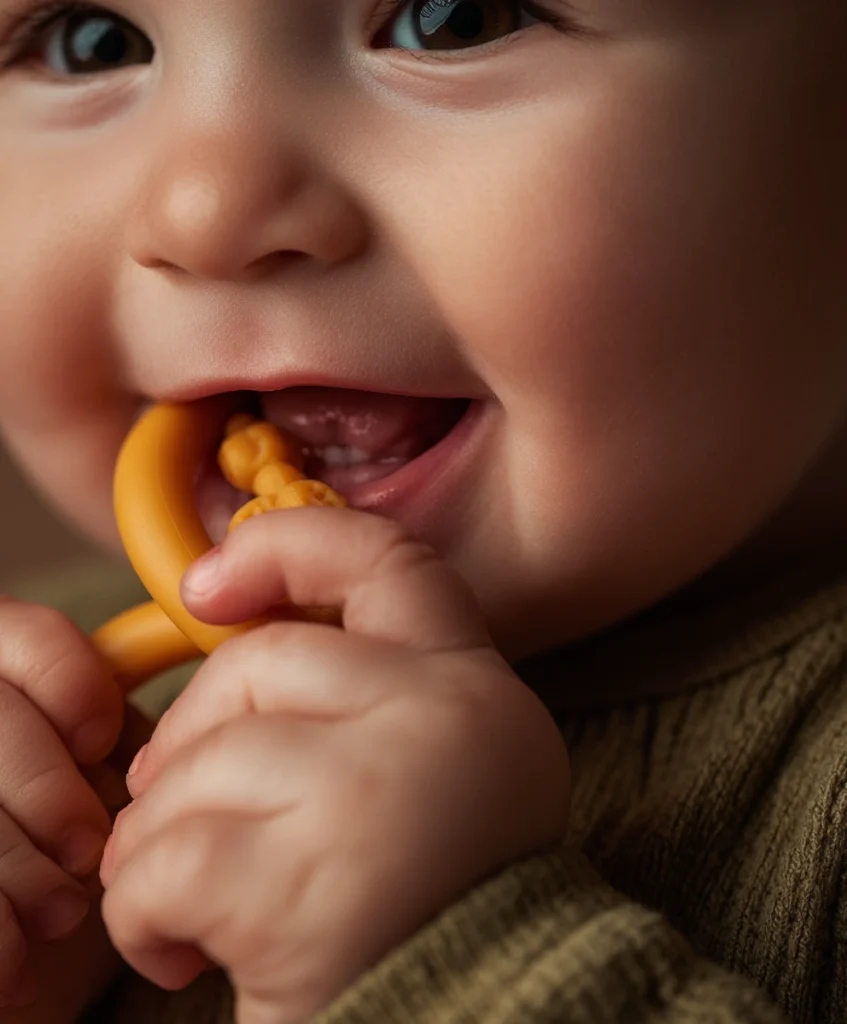
Teething is one of the main reasons for baby grinding teeth. When a new tooth pushes through the gum, babies feel pressure, itching, or mild pain. Grinding may act as a natural self-soothing response. It relieves tension in the gums and jaw and helps the baby adapt to the new teeth.
2. Exploring New Sensations
When babies first get teeth, they become fascinated by the new feeling of hard surfaces in their mouth. They rub their upper and lower teeth together simply to experiment. It’s part of discovering their body. This type of baby grinding teeth is harmless and usually stops once the novelty wears off.
3. Jaw and Bite Development
As the jaw grows and the dental bite changes, babies may grind their teeth to find a comfortable position between upper and lower teeth. This is called occlusal adjustment. It’s a temporary adaptation process that disappears once the bite stabilizes.
4. Sleep Patterns
Some babies grind their teeth while sleeping. This type of baby grinding teeth, known as sleep bruxism, may occur during light sleep phases or when the baby transitions between sleep stages. It is often harmless, but in a few cases, it can be associated with sleep disturbances or breathing issues.
5. Stress or Emotional Factors
Although stress seems like an adult problem, babies can also experience emotional tension — for example, due to separation from parents, change in routine, or discomfort. Grinding teeth can be an unconscious way to release that tension. In my medical practice, I have noticed that baby grinding teeth often appears more frequently during emotional changes or illness.
6. Airway or Breathing Issues
In some cases, grinding can be related to airway obstruction or mouth breathing. Babies who snore, have enlarged tonsils, or show difficulty breathing during sleep may grind their teeth more often. These cases should be evaluated by a pediatrician or ENT specialist.
How Common Is Baby Grinding Teeth?
The habit of baby grinding teeth is surprisingly common. Research shows that up to half of all children experience teeth grinding at some point. In babies, it is usually a short-lived phase lasting a few weeks or months. Most children stop grinding once all baby teeth have erupted or when permanent teeth start appearing around age 6.
From my own experience, I see about one in five babies showing noticeable grinding behavior during teething. Parents usually discover it at night or during naps when the room is quiet enough to hear the sound clearly.
Is Baby Grinding Teeth Dangerous?
In most cases, baby grinding teeth is not dangerous. The teeth are strong, and grinding for a few weeks rarely causes damage. However, prolonged or intense grinding can sometimes lead to issues such as:
- Flattened or worn teeth
- Increased tooth sensitivity
- Mild jaw soreness
- Sleep disturbance
- Irritability from pain
If you notice that your baby grinds teeth very loudly, seems uncomfortable, or shows visible wear on the teeth, it’s wise to consult your doctor or dentist. As a physician, I always recommend early evaluation if the behavior persists or if there are additional symptoms like sleep trouble or feeding problems.
When to See a Doctor or Dentist
You should consider seeing a medical professional if:
- Grinding continues beyond age 2
- The sound is very loud or frequent
- Your baby shows signs of jaw pain or earache
- The teeth appear chipped, flat, or damaged
- There are sleep or breathing problems
As a doctor, I reassure parents that early consultation doesn’t necessarily mean there is something serious. It helps confirm whether the grinding is just part of normal development or needs treatment.
What You Can Do at Home
If your baby is grinding teeth, there are several simple things you can do to reduce discomfort and protect the teeth.
1. Relieve Teething Pain
- Offer a safe teething toy or chilled (not frozen) teether.
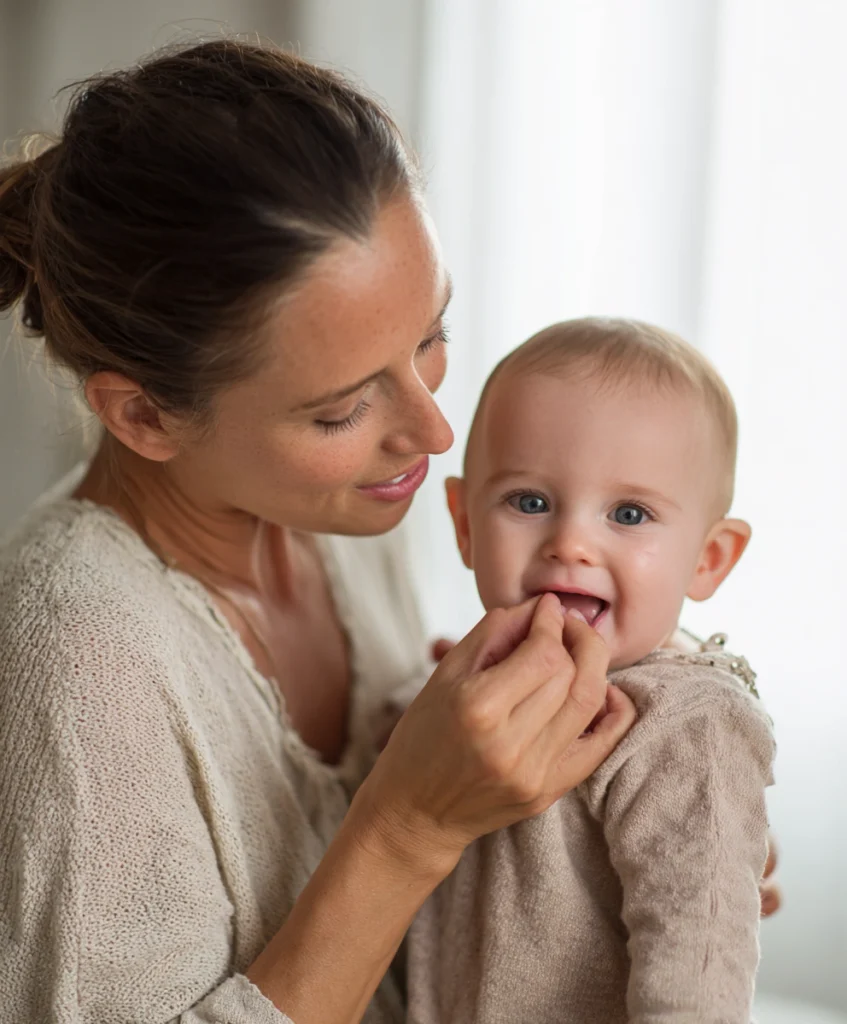
- Gently massage the gums with a clean finger.
- Wipe drool frequently to prevent skin irritation.
- Avoid teething gels that contain harmful ingredients.
These actions can help reduce the urge for baby grinding teeth caused by teething discomfort.
2. Encourage Good Sleep Habits
Create a calm sleep environment with consistent routines. Soft music, gentle rocking, and a dark room help babies sleep deeper and reduce grinding episodes. Regular sleep schedules are beneficial for overall neurological development.
3. Monitor and Record
Keep a short diary: note when the grinding occurs, how often, and if there are any patterns (during teething, after stress, before naps). This helps your doctor identify triggers.
4. Protect Teeth and Jaw
Make sure your baby’s mouth is clean. Start brushing gently with a baby toothbrush once the first tooth erupts. Visit a pediatric dentist around the first birthday. Early dental visits ensure that baby grinding teeth has not caused any enamel damage.
5. Manage Environmental Stressors
Reduce noise, screen time, and overstimulation before bedtime. Babies are sensitive to emotional tension around them. Calm surroundings can lower the frequency of baby grinding teeth.
My Medical Experience as a Doctor
From my medical practice, I have seen dozens of cases of baby grinding teeth. Parents often panic, thinking their child’s teeth will break or fall out. The truth is, in nearly all cases, the behavior is temporary and harmless.
I usually advise parents to stay calm, observe, and manage teething discomfort. I explain that the baby’s nervous system is still learning how to control jaw muscles, and grinding is part of that learning process. By the time children reach 18 months to 2 years old, the habit usually disappears completely.
However, I also share that a small number of cases require attention — especially when teeth are visibly worn, or when grinding happens along with sleep difficulties, mouth breathing, or frequent awakenings. In those cases, further medical or dental evaluation is important.
Scientific Insights About Baby Grinding Teeth
Scientific studies suggest that bruxism in infants and children can have several overlapping mechanisms — neurological, behavioral, and physiological. Researchers have identified connections between baby grinding teeth and factors such as stress, sleep quality, tooth eruption, and even exposure to secondhand smoke.
The good news is that no evidence links normal baby bruxism to long-term harm. The enamel of baby teeth can handle mild pressure. Furthermore, because these teeth will eventually be replaced by permanent ones, short-term grinding rarely has consequences.
Still, as a doctor, I recommend keeping an eye on any persistent grinding beyond early childhood. Continuous observation ensures that if a problem arises — such as a bite misalignment or jaw strain — it can be treated early.
Can Baby Grinding Teeth Affect Permanent Teeth?
In the vast majority of cases, no. The habit stops before permanent teeth appear. However, if grinding persists into later childhood, it could cause premature wear on permanent teeth or strain on the jaw joint (temporomandibular joint). That’s why addressing prolonged baby grinding teeth early can prevent future dental issues.
How to Prevent Baby Grinding Teeth
Although not all cases are preventable, the following tips can reduce the likelihood of grinding or minimize its impact:
- Offer teething toys regularly during tooth eruption
- Ensure proper sleep and feeding routines
- Avoid exposure to secondhand smoke
- Encourage relaxed bedtime environments
- Schedule early dental checkups
- Consult a doctor if grinding continues or worsens
Parents who stay observant and responsive usually see the habit fade naturally.
Prognosis and Long-Term Outlook
The overall outlook for baby grinding teeth is excellent. The habit tends to peak around 8–12 months of age and gradually decreases as the child grows. By the time toddlers reach age 2 or 3, most have completely stopped grinding.
Occasionally, a few children may continue mild bruxism into later years. In such cases, it’s usually mild and not harmful. Early education, dental care, and reassurance from medical professionals make a big difference in keeping both parents and babies at ease.

Frequently Asked Questions About Baby Grinding Teeth
Is grinding teeth linked to autism?
Teeth grinding can appear in children with or without autism. While baby grinding teeth is common during normal development, studies show that some children with autism spectrum disorder (ASD) may grind their teeth more often, especially during stress, anxiety, or sensory overload. This happens because some children with ASD experience different sensory responses and muscle control.
However, grinding alone is not a sign of autism. If a child shows other developmental or behavioral differences, a doctor can evaluate for ASD. In infants, baby grinding teeth is almost always unrelated to autism and is simply part of teething or jaw development
How to stop a baby grinding their teeth?
Most of the time, baby grinding teeth stops on its own as your child grows. But you can help reduce it by:
Giving a chilled teething toy or gum massage to ease discomfort.
Keeping a calm sleep routine with low noise and soft light.
Avoiding stress and overstimulation before bedtime.
Ensuring the baby is not exposed to secondhand smoke, which can worsen bruxism.
Scheduling an early dental checkup around the first birthday.
If the grinding continues beyond 2 years old or causes tooth wear, consult a pediatric dentist or doctor for evaluation.
Can baby grinding teeth damage their teeth?
Usually, no. The enamel of baby teeth is quite resistant, and baby grinding teeth rarely causes permanent damage. The habit is temporary and stops once the bite stabilizes. Still, if you notice flattened teeth, visible chips, or increased sensitivity, it’s important to seek professional advice to prevent complications.
Does baby grinding teeth happen during sleep or while awake?
Both are possible. Some babies grind their teeth while awake, especially when teething or exploring new mouth sensations. Others do it during light sleep phases. Sleep-related grinding may sound louder but is often harmless. If it disrupts sleep or continues over time, mention it during your child’s next medical or dental visit.
Final Thoughts from a Doctor
Hearing your baby grinding teeth can be unsettling, but it’s often just a normal part of growth. As a doctor, my message to parents is simple: stay calm, monitor, and provide comfort. In most cases, no treatment is needed — only time and patience.
If grinding becomes severe, lasts too long, or causes visible tooth wear, a medical or dental evaluation is the best next step. With professional advice and gentle care at home, your baby’s smile will stay healthy and strong.
In conclusion, baby grinding teeth is usually a short, harmless stage that reflects teething, jaw development, or exploration. Understanding its causes and knowing when to act will help you protect your child’s dental health while enjoying peace of mind as a parent.