

Introduction About Can You Get an MRI While Pregnant
Pregnancy is a time when medical decisions must carefully balance maternal health with fetal safety. Diagnostic imaging is sometimes necessary to evaluate symptoms, confirm diagnoses, or guide treatment. When this happens, many expectant mothers ask an important question: can you get an MRI while pregnant?
Magnetic resonance imaging (MRI) is widely used in modern medicine because it produces detailed images of soft tissues without using ionizing radiation. This makes it particularly relevant in pregnancy, where radiation exposure is generally avoided whenever possible. Despite its advantages, concerns remain about whether MRI could pose risks to the developing fetus.
This article provides a comprehensive, evidence-based explanation of Can You Get an MRI While Pregnant , including how MRI works, what scientific studies show about safety, when it is medically indicated, trimester considerations, contrast use, and practical precautions. The aim is to offer clear, trustworthy guidance for both patients and healthcare professionals.
Table of Contents About Can You Get an MRI While Pregnant
What Is an MRI and How Does It Work?
Magnetic resonance imaging is a diagnostic technique that uses strong magnetic fields and radiofrequency waves to generate detailed images of organs and tissues inside the body. Unlike X-rays or CT scans, MRI does not involve ionizing radiation.
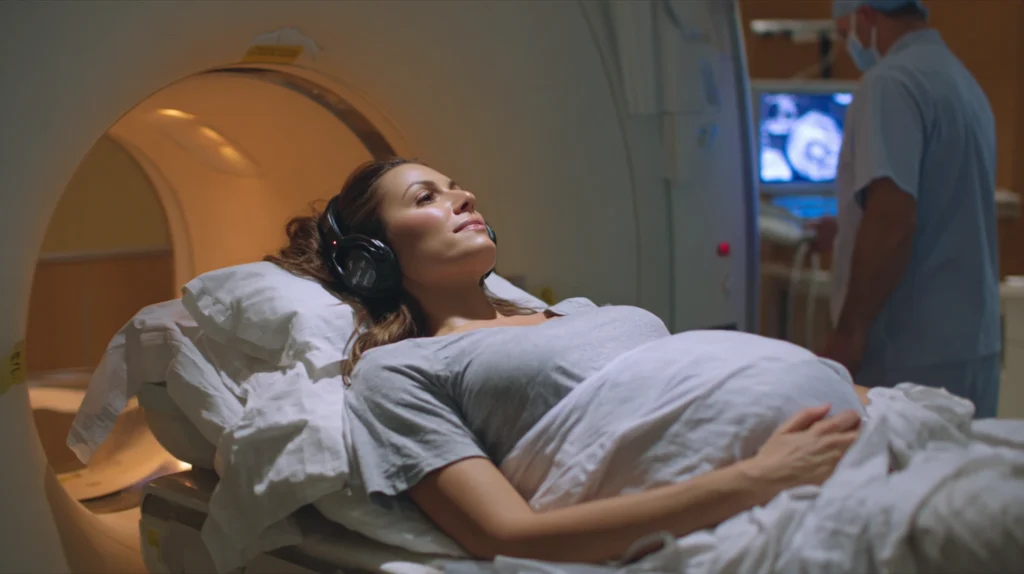
During an MRI scan, the patient lies on a movable table that slides into a cylindrical scanner. The magnetic field aligns hydrogen atoms in the body, and radio waves create signals that are converted into images by a computer. These images are especially useful for evaluating the brain, spine, abdomen, pelvis, and soft tissues.
Because it avoids radiation exposure, MRI while pregnant is often considered a safer imaging option compared to techniques that rely on X-rays, especially when detailed anatomical information is required.
Is MRI While Pregnant Safe?
What Scientific Evidence Shows
Extensive research over several decades has not demonstrated harmful effects of MRI without contrast on the fetus. Large observational studies comparing pregnancy outcomes in women who underwent MRI with those who did not have found no increase in miscarriage, congenital malformations, growth restriction, or long-term developmental problems.
Based on available data, MRI while pregnant is considered safe when performed without contrast and when there is a clear medical indication. This conclusion is supported by radiology, obstetrics, and maternal-fetal medicine experts worldwide.
Theoretical Risks and Why They Remain Unproven
Although no proven harm has been identified, some theoretical concerns are often discussed:
- Heating effects: MRI uses radiofrequency energy that can cause minimal tissue heating. Modern MRI systems are strictly regulated to prevent clinically significant temperature increases.
- Acoustic noise: MRI scanners generate loud sounds. Studies have not shown evidence of fetal hearing damage related to MRI exposure.
- Magnetic field exposure: No human data support adverse fetal effects from the magnetic fields used in diagnostic MRI.
Importantly, these concerns remain theoretical, and real-world clinical evidence has not confirmed associated risks.

MRI While Pregnant Compared With Other Imaging Methods
When imaging is needed during pregnancy, healthcare providers select the modality that offers the most information with the least risk.
- Ultrasound is the first-line imaging tool during pregnancy because it is safe, accessible, and effective.
- MRI while pregnant is often the next step when ultrasound findings are inconclusive or when more detailed visualization is required.
- CT scans and X-rays use ionizing radiation and are generally avoided unless absolutely necessary.
MRI provides superior soft-tissue contrast without radiation, making it particularly valuable for evaluating complex maternal or fetal conditions.
When Is MRI While Pregnant Recommended?
MRI is not performed routinely during pregnancy, but it becomes essential in specific clinical situations. Common indications include:
- Suspected fetal brain or spinal abnormalities
- Evaluation of placental disorders, such as abnormal placental invasion
- Assessment of unexplained severe abdominal or pelvic pain
- Investigation of maternal neurological symptoms, including severe headaches or seizures
- Characterization of tumors or masses when radiation exposure should be avoided
- Further evaluation of abnormal ultrasound findings
In these scenarios, Can You Get an MRI While Pregnant can provide critical diagnostic information that directly influences medical management and outcomes.
Trimester Considerations for MRI During Pregnancy
First Trimester
The first trimester is a sensitive period because major fetal organs are developing. Although studies have not shown harm from MRI in early pregnancy, clinicians often avoid non-urgent imaging during this stage as a precaution.
However, if a serious maternal or fetal condition requires immediate evaluation, MRI while pregnant may still be performed in the first trimester when the diagnostic benefit outweighs theoretical concerns.
Second and Third Trimesters
MRI is more commonly used during the second and third trimesters. At these stages, fetal anatomy is more developed, and MRI is frequently used to assess fetal structures, placental position, or maternal conditions requiring urgent diagnosis.
Contrast Use and MRI While Pregnant
Not all MRI examinations require contrast. When contrast is used, a gadolinium-based agent is injected intravenously to improve image clarity.
Is Gadolinium Safe in Pregnancy?
Gadolinium can cross the placenta and reach the fetus. Some studies suggest a possible association between gadolinium exposure during pregnancy and rare adverse outcomes. For this reason, contrast agents are not routinely recommended during pregnancy.
Gadolinium is considered only when:
- The diagnostic question cannot be answered without contrast
- The imaging result will significantly change clinical management
- The potential benefit clearly outweighs theoretical risks
Whenever contrast is considered for Can You Get an MRI While Pregnant , informed consent and careful clinical judgment are essential.
Safety Measures During MRI While Pregnant
To ensure safety and comfort, imaging teams typically follow several precautions:
- Confirmation of pregnancy status before the scan
- Screening for metallic implants or devices
- Use of the shortest scan time necessary
- Avoidance of contrast unless absolutely required
- Positioning adjustments for comfort, especially in late pregnancy
Pregnant patients should always inform the radiology team about their pregnancy before undergoing MRI.

Common Myths About Can You Get an MRI While Pregnant
Can You Get an MRI While Pregnant
Myth: MRI exposes the baby to radiation
MRI does not use ionizing radiation.
Myth: MRI always causes fetal harm
There is no scientific evidence showing harm from non-contrast MRI during pregnancy.
Myth: MRI should never be done early in pregnancy
MRI can be performed in any trimester when medically necessary.
Myth: MRI noise damages fetal hearing
Studies have not demonstrated fetal hearing injury from MRI exposure.
What to Expect During MRI While Pregnant
The experience of MRI while pregnant is similar to that of non-pregnant patients:
- The scan is painless
- The machine is loud, but ear protection is provided
- The patient must remain still for optimal image quality
- Scan duration varies depending on the area examined
Some women may feel anxious or uncomfortable, especially in late pregnancy. Communicating concerns beforehand can help improve comfort during the procedure.
Clinical Decision-Making
The decision to perform MRI while pregnant is always individualized. Healthcare providers consider:
- The urgency of the medical condition
- Available alternative imaging options
- Gestational age
- Whether contrast is required
- The potential impact on maternal and fetal health
When MRI is recommended, it is because the benefits of accurate diagnosis clearly outweigh any theoretical risks.
FAQ About Can You Get an MRI While Pregnant
What happens if you have an MRI scan while pregnant?
If you have an MRI scan while pregnant, current medical evidence shows that no harm is expected to the baby when the MRI is performed without contrast. MRI does not use ionizing radiation, which is the main risk associated with X-rays or CT scans during pregnancy. Instead, it relies on magnetic fields and radio waves, which have not been shown to cause birth defects, miscarriage, or developmental problems in humans.
Healthcare providers recommend MRI during pregnancy only when it is medically necessary, such as when ultrasound results are unclear or when detailed imaging is required to evaluate maternal or fetal conditions. As a precaution, contrast agents are usually avoided unless the diagnostic benefit clearly outweighs potential risks. Overall, when clinically indicated, MRI is considered a safe and valuable diagnostic tool during pregnancy.
Conclusion About Can You Get an MRI While Pregnant
So, can you get an MRI while pregnant?
Yes. MRI while pregnant is considered safe when medically indicated, particularly when performed without contrast. Extensive research and long-term clinical experience support its use across all stages of pregnancy when diagnostic information is essential.